Can Seller Credit Be Used for Down Payment
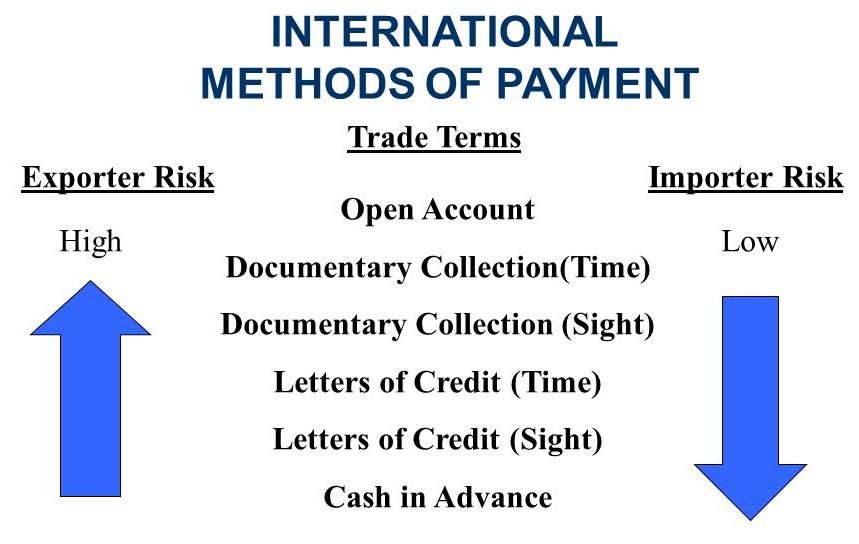
The most common payment terms for contracts are "open up account" (the seller delivers without whatsoever guarantee, and expects the payment at a later stage), "documentary collections" (the exchange of the documents representative of the appurtenances and the payment are managed via banks), "letters of credit", "cash in advance".
CASH IN ADVANCE (CA)
Cash in advance is one of the nearly secure payment terms for sellers, and the to the lowest degree secure for buyers. Indeed, Seller ships the goods to the buyer only later receiving the full (or partial) payment for the goods (upfront payment).
Payments are made by wire transfer or by company checks (in the Usa). In the project materials industry, greenbacks in advance payment terms are rather rare and may occur for stock and fast-track deliveries only.
What is "TT Payment"?
A bank transfer, otherwise called telegraphic transfer or telex transfer ("T/T") is the electronic transfer of funds from a buyer/importer to a seller/exporter, via a depository financial institution or a like institution.
For most countries and banks, every bit a buyer confirms a wire transfer, the funds cannot exist recovered from the beneficiary (such payments are irrevocable). ACH payments may be an exception, i.e. they tin can be revoked.
T/T payments expose the buyer to loftier risks.
Alternative payment risks, described below, have been introduced to minimize the payment risks for buyers (and suppliers) in international trading operations.
OPEN ACCOUNT
Under open account payment terms, the supplier ships the appurtenances to the heir-apparent without receiving upfront payments and collects the due amounts at a later on date (15, 30, 60, ninety days or more).
Discounts on the invoice face up value may be granted, on the sale invoice, for anticipated payments.
This blazon of payment, which is quite common, has an opposite nature to "cash in advance", as it is very favorable for the buyer and unfavorable for the seller (who bears the full payment risks).
Payments in open account are by and large accustomed by suppliers with depression negotiation power or by suppliers that take long-lasting relationships with the buyer.
Credit Insurance
Some sellers subscribe credit insurance contracts assertive that they will protect their "open account" sales.
A mutual trait of these types of contracts, which are generally expensive, is that they really embrace the creditor in instance of defalcation of the debtor but they exercise not cover the seller when the buyer rejects payment for whatsoever due or undue crusade.
When a buyer disputes a delivery, the insured seller has to turn to the Law, and not to the credit insurance company, to get the payment.
Depository financial institution'S DOCUMENTARY Drove
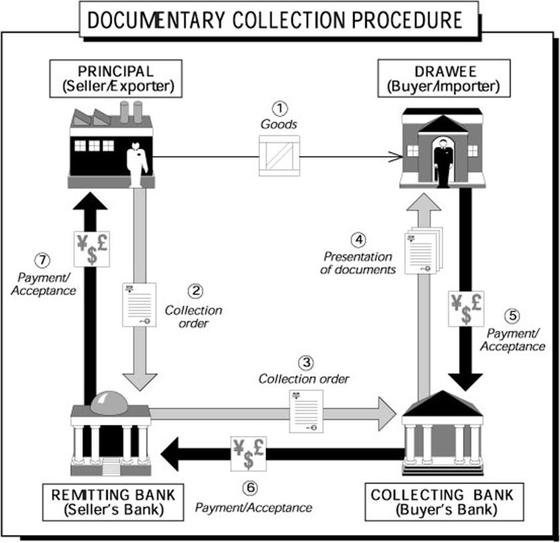
Under this payment terms, the seller gets paid and the heir-apparent and the seller commutation the documents representative of the goods and the payment via the intermediation of a remitting and a collecting banking concern).
This type of payment works in this fashion:
- The seller ships the goods to the heir-apparent
- The submits the shipping documents and a "drove society" to its bank ("Remitting bank") at the time of shipping. The typhoon includes instructions to release the documents to the buyer upon receipt of a buyer's payment or heir-apparent'southward acceptance of the typhoon (which can be at sight, enervating payment on presentation, or deferred at a future date)
- The Remitting bank sends the documents, the typhoon, and the collection instructions to the "Collecting or presenting bank" (the bank of the importer)
- The collecting banking company carries out the seller's collection order and, upon receipt of payment from the buyer, remits payment to the seller's banking concern and to the seller, ultimately
Greenbacks AGAINST DOCUMENTS ("CAD" or "DP")
Cash Against Documents ("CAD" or "D/P") are widely used payment terms in international trading operations.
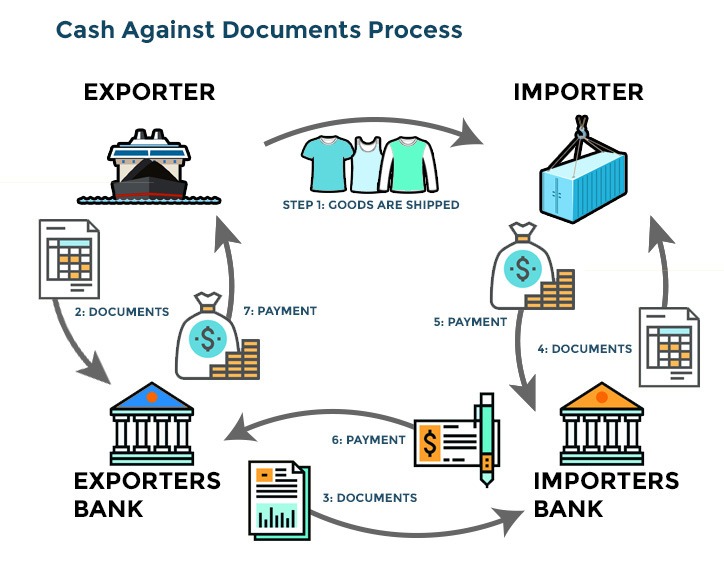
CAD is a payment term in which an exporter instructs his bank to hand over the aircraft documents to the importer when the importer fully pays the accompanying bill of substitution or draft.
Under a CAD agreement, the seller receives the payment of the appurtenances if the heir-apparent pays the due corporeality and withdraws the pre-agreed documents (generally through its own banking concern).
The aircraft document set up includes, generally, the commercial invoice, packing listing, test certificates, inspection documents, bill of lading, insurance document, mill test reports, and allows the importer to take possession of the appurtenances.
The advantages of CAD are:
- Lower complexity and cost than a letter of credit (easier both for seller and buyer)
- Buyer's credit lines are not impacted
- Faster procedure for buyer and seller, as bank intervention is minimal
This payment term is represented in the illustration below:
Risks of Cash Confronting Certificate Payment:
The main risk of CAD payment term is that buyers may not collect the goods and the aircraft documents afterward the shipment has taken place.
Hence, DAP is a very different organization than the payment past letter of credit, where the seller basically no payment risk in case compliant documents are sent to the issuing bank within the validity of the credit.
Due to this fact, sellers shall be very careful with DAP payment terms as they generate unpaid invoices and backlog stock.
Alphabetic character OF CREDIT
A Alphabetic character of Credit, simply divers, is a written instrument issued by a bank at the request of its customer, the Importer (Heir-apparent), whereby the bank promises to pay the Exporter (Beneficiary) for goods or services, provided that the Exporter presents all documents called for, exactly as stipulated in the Letter of Credit, and meet all other terms and conditions fix out in the alphabetic character of Credit.
A Letter of the alphabet of Credit is too commonly referred to every bit a Documentary Credit.
Messages of credit are used between trade partners that practice non know themselves well, are located in remote locations and do non accept the payment risks of other payment terms equally open up account, bank transfer, and, cash confronting documents.
The terms "Letters of Credit" /or L/C) and "Documentary Credit" (D/C) have the same exact meaning. The first is more common in Usa and Asia, whereas the latter is mutual terminology in Europe.
HOW TO Effect AN LC
Before issuing an LC, the importer shall have approved credit limits sanctioned by the issuing depository financial institution.
Moreover, imports and exports transactions that involve foreign currencies are field of study to foreign exchange regulations and other International rules like UCPDC 600, URR etc.
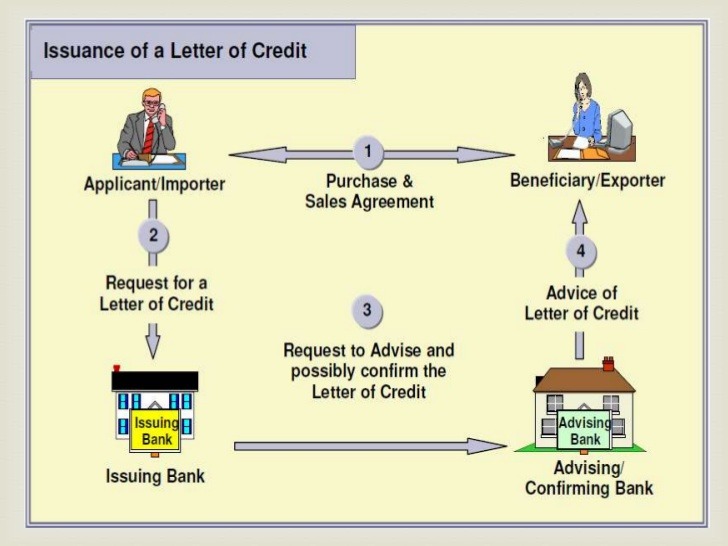
Generally, the issuing depository financial institution requires the importer to submit an LC Application form to outcome a Letter of Credit.
After receiving the application, the bank issues a draft LC that the importer and exporter can review and, in instance, amend. As the LC is agreed between the parties, the issuing bank submits the LC to the exporter advising depository financial institution, who in turn informs the seller. As an LC is received, the seller can starting time the manufacturing or delivery operations with stiff payment security.
TYPES OF LETTERS OF CREDIT
There are a few types of letter of credit, the most common are:
- At Sight LC
- Time/Usance LC
- Differed/Mixed Payment LC
- Revolving LC
- Confirmed LC
- Transferable LC
- Back to Back LC
- Advance Payment LC
- Discounting LC
- Standby LC
STANDBY Letter of the alphabet OF CREDIT
A standby letter of credit is a guarantee of payment past a banking company on behalf of a client. Information technology is a loan of last resort in which the bank fulfills payment obligations at the finish of a contract in case of failed payment past the banking concern'due south client.
Standby letters of credit are issued not to be used, normally. Standby messages of credit aid prove a business' creditworthiness and pay back ability.
Types of Standby Letters of Credit
- Operation Standby letter of credit
- Performance standby letters of credit ensure the nonfinancial contractual obligations (quality of work, corporeality of work, fourth dimension, price, etc.) are performed in a timely and satisfactory manner. If these obligations are not met, the banking concern will pay the third party in full.
- The financial Standby letter of the alphabet of credit
- Financial standby letters of credit ensure fiscal contractual obligations are fulfilled. Most SLOCs are financial.
- Financial SLOCs are often required when performing an international merchandise or other large purchase contracts under which other forms of payment protections (such as litigation in the event of non-payment) can be hard to obtain.
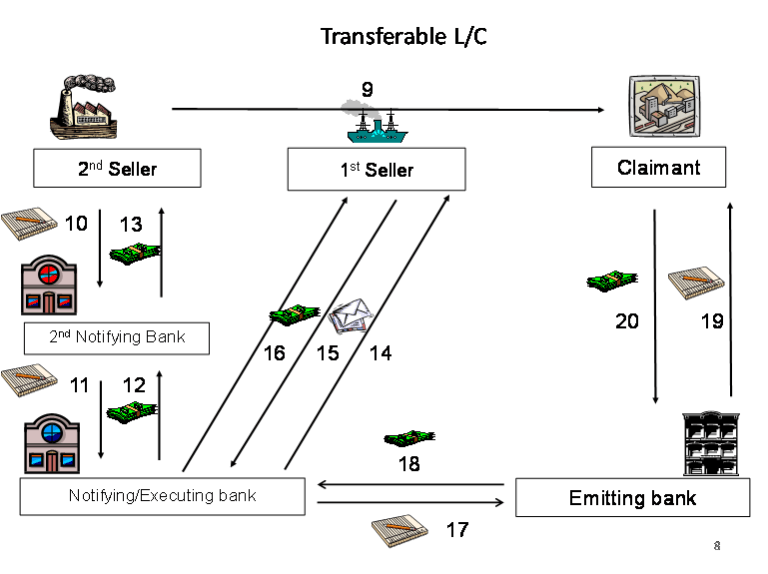
TRANSFERABLE LETTER OF CREDIT
A transferable letter of credit is a special transferable form of a documentary letter of credit opened for the do good of the intermediate seller (the kickoff casher).
The transferable form allows the intermediate seller to apply to the nominated banking concern with a asking of transferring the letter of the alphabet of credit in whole or in office to the supplier (the 2nd beneficiary).
In example the intermediate seller purchases products from multiple suppliers, it has the right to instruct the nominated bank to transfer the letter of credit by parts to each of the suppliers.
CONFIRMED LETTER OF CREDIT
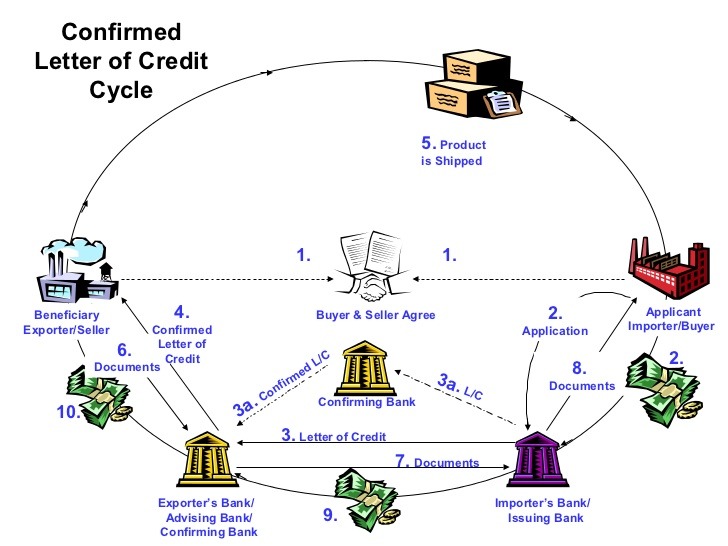
A confirmed LC is a letter of credit with higher payment security than unconfirmed letters of credit: indeed, such type of letter of credits are guaranteed both past the issuing and the confirming bank. Confirmed LCs are frequently used when selling to countries field of study to political risks, that may generate default of the local issuing banks.
The beneficiary of an LCmay request his bank to confirm the credit ("add confirmation"), paying a price, if the issuing bank has accustomed such a possibility under the terms of the credit.
By adding a confirmation, the confirming banking concern (the seller's depository financial institution, generally) commits to honoring the letter of credit in case the casher submits a compliant set of documents within the validity of the credit.
Such undertaking from the confirming bank is separate from, and in addition to, the undertaking of the issuing bank.
BENEFITS OF CONFIRMED LC
The exporter may be interested in adding confirmation to the letter of credit in the following cases:
- when the creditworthiness of the issuing banking company is uncertain
- when selling to politically unstable countries
- to prevent the risk of default of the issuing banking concern
- to execute the LC faster
Banks confirm LCs at a price that is expressed as an involvement rate or a fixed fee (or a combination of both). More often than not, the cost is an interest rate ratio (example Libor) plus a spread (confirmation fee). The higher the hazard for the confirming bank, the higher the cost.
BACK TO BACK Alphabetic character OF CREDIT
Back to dorsum LC'south are interesting instruments used past skilled traders/intermediariesto finance purchase and sell transactions without using ain upper-case letter or collaterals.
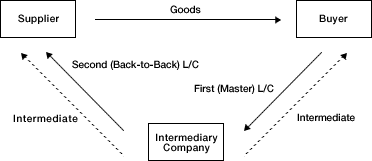
Under this schema, the trader who is the beneficiary of the letter of the alphabet of credit from an end user may leverage the "primary LC" (export LC) and obtain a "secondary" LC (import LC) from his banking concern in favor of its supplier(s), without using ain majuscule for the transaction.
A back to back transaction involves two different (but continued) alphabetic character of credits:
- main LC/ export LC: the LC issued past the finish user to the trader
- secondary LC/ import LC: the LC issued by the trader to its seller (manufacturer, stockholder, distributor of the appurtenances to be delivered to the end buyer)
Under this schema, the intermediaryuses the export LC as collateral to get an import LC issued by his banking concern, without financing such LC with own funds.
The back-to-back LC schema is represented here:
CONDITIONS FOR A Back TO Dorsum LC
The primal conditions to put in a place a back to back schema are:
- the trader has a successful trading history with his bank
- the trader is the first casher of the "export LC" (the LC issued by the cease user)
- the export LC has been issued by a prime number banking company, and information technology tin exist confirmed by the advising bank of the trader (showtime beneficiary)
- trader's supplier(s) shall accept payment past letter of credit
- import and export LC's show same terms and conditions, except for the price of the goods (nature of goods, delivery place, and terms, pay location, documents, etc)
Non all banks accept a back to back schema, as it involves some degree of risk for the banking concern itself. However, when banks tin ensure a consequential cash in and greenbacks out, and know the terms of the transaction well, a back to back LC may be arranged.
BENEFITS OF BACK TO Dorsum LETTER OF CREDIT
- The trader may finance the transaction without impacting own funds or credit lines
- buyer may not know the identity of the seller, and the seller may non know the identity of the stop heir-apparent
- The trader may expand the business beyond its fiscal capacity
TRANSFERABLE VS Back TO BACK Letter OF CREDIT
Differently from "transferrable" LCs, which require the end user to approve the transfer of the credit from the original casher to a new casher (condition that is seldom accustomed, every bit risky), a back to back LC does non crave such approval and is a private arrangement between the beneficiary of the "principal LC" /"export LC" and its bank.
The cease user and the manufacturer of the goods may be totally unaware of the fact that a dorsum to back arrangement has been put in identify to execute the transaction.
hennesseythenined62.blogspot.com
Source: https://blog.projectmaterials.com/project-procurement/contract-payment-terms-options/

Post a Comment for "Can Seller Credit Be Used for Down Payment"