World Health Organization Grass Fed Beef
58,383 Readers
Is Grass-Fed Beefiness Practiced for Your Health & the Planet?
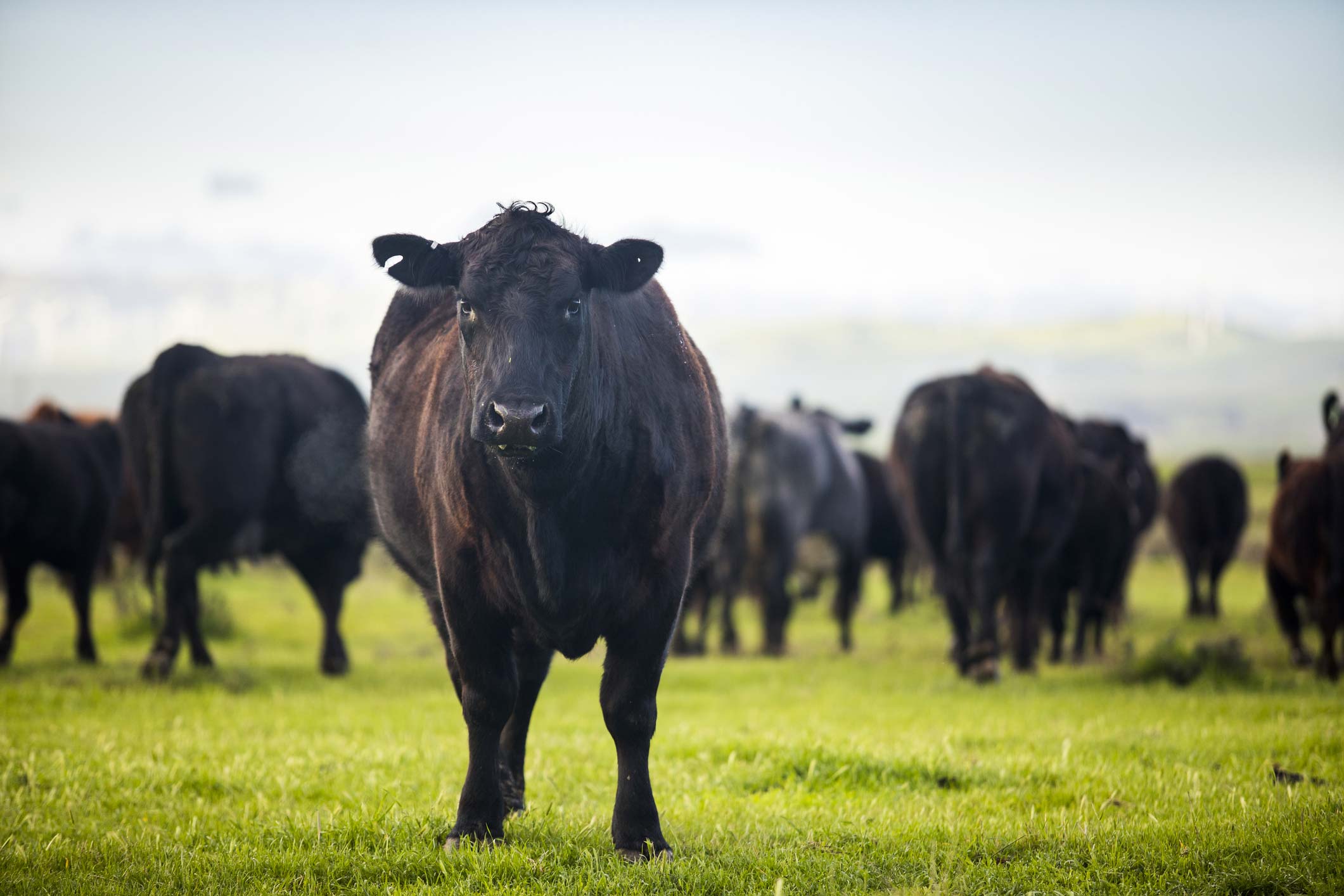
Cattle (similar sheep, deer, and other grazing animals) are endowed with the ability to convert grasses, which we humans cannot digest, into flesh that nosotros are able to assimilate. They can do this because, unlike humans, who possess but one stomach, they are ruminants, which is to say that they possess a rumen, a 45-or-so gallon fermentation tank in which resident bacteria convert cellulose into protein and fats.
In the US, nonetheless, nearly 97% of the cattle raised for beef spend the latter portion of their lives in feedlots, where they're fed corn and other grains that humans could eat — and they convert it into meat quite inefficiently. Since it takes anywhere from, depending on who is doing the calculation and what they include, four to (according to some estimates) as many as 20 pounds of grain to make a pound of feedlot-derived beef, we actually get far less food out than we put in. What we've created is effectively a protein factory in opposite.
And nosotros do this on a massive calibration, while nigh 2.5 billion people on our planet are experiencing some level of hunger.
But industrialized beef is facing criticism from a growing trunk of leaders. The United Nations' Intergovernmental Console on Climatic change is calling for humanity to eat less meat in order to assist u.s. save the planet. Organizations like the American Centre Association and the National Cancer Institute are urging consumers to swallow less (or no) cerise meat in society to help fight center affliction and cancer. And even superstar entertainers like Beyoncé and Jay-Z have been getting in on the action, offering free concert tickets to fans willing to commit to a plant-based diet.
The Rise of Grass-Fed Beef
Despite the calls for consumers to swallow less meat in order to fight environmental problems like climate change — equally well equally research showing that carmine meat isn't doing your health whatsoever favors — beef consumption in the US has recently been on the rise. This is partly fueled by speedily expanding sales of grass-fed beef.
Advocates for grass-fed beef say it has health and environmental benefits compared to conventionally-raised beefiness. Marketers and enthusiasts praise it as a healthy nutrient rich in protein, B vitamins, iron, and other nutrients. And some environmentalists gush over the theory that properly managed grass-fed beefiness could help sequester carbon in the footing, building topsoil and fighting climate change at the aforementioned fourth dimension.
And consumers are responding. The grass-fed beef marketplace has emerged as a multi-billion dollar industry that shows no sign of slowing down. In fact, the marketplace for grass-fed beef is predicted to grow past $14.5 billion between 2020 and 2024.
Only is at that place truth behind these behavior almost grass-fed beefiness, or is this merely a bunch of hearsay by environmentally conflicted burger-lovers trying to justify their meat habit? Is grass-fed beef really better for yous, the animals, or the environment? And if it is, does that mean you should eat information technology?
What Is Grass-Fed Beefiness?
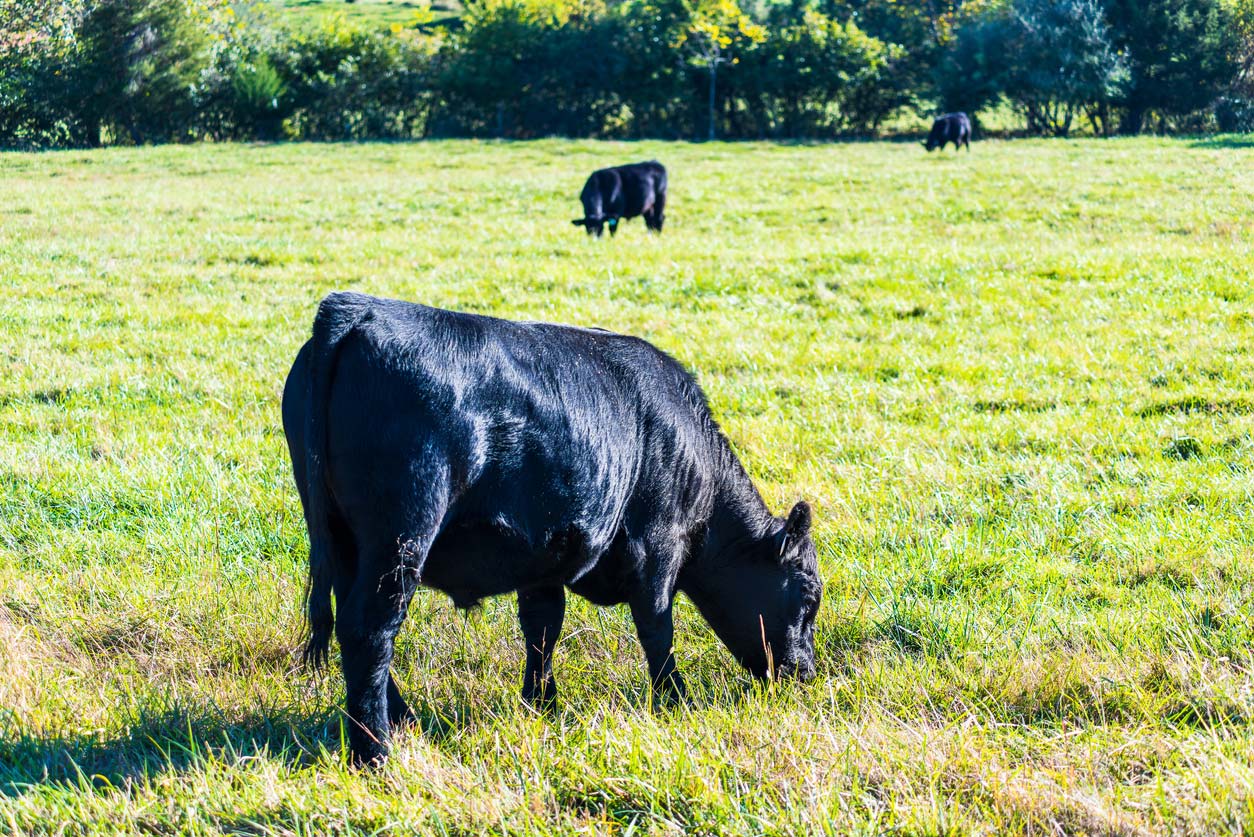
Completely grass-fed beef was the norm in the beef industry before the 1950s. Cattle got to live longer back then, sometimes reaching their 3rd birthdays. In the middle of the 20th century, as the popularity of hamburgers and fast food in the United states of america grew, farmers and ranchers needed a way to fatten up cattle faster, so they started feeding them free energy-dense grain and soy instead.
Today, most cattle in the U.s.a. start out eating grass, only are fattened — or what the industry euphemistically calls "finished" — on grain and soy for their last 160-180 days of life. (While this accounts for barely a 3rd of their lifespan, more than 50% of their weight proceeds occurs during this final half-year.) Cattle who are fattened up in CAFOs reach their slaughter weight in as little as 14 months.
Grass-fed cattle, on the other manus, feed on grass and other forage for their entire lives. Since the grass they eat is much less calorie-dense than feedlot grain, they're sent to slaughter later — unremarkably between one and a half and two years old. Their boilerplate weight at slaughter is about one,200 pounds, compared with about one,350 pounds for feedlot cattle.
Then grass-fed cattle alive longer and yield less edible meat than their grain-fed counterparts.
Is Grass-Fed Beef Better than Conventional Beef?
Despite all the claims that grass-fed beefiness is better than conventional beef, what does the enquiry actually show the states? Permit's have a wait at the 3 main areas where grass-fed beef is said to be a better pick: diet, the environment, and the treatment of animals.
Grass-Fed Beefiness Nutrition
Grass-fed beef is marketed to consumers every bit being nutritionally-superior to conventional beef. And it is. Simply that's non a very high bar. When compared on a per calorie ground, grass-fed beefiness is higher in B vitamins, iron, phosphorus, zinc, selenium, and vitamins A and E (it's also touted as being college in omega-3 fat acids, but the truth is it still has simply a negligible corporeality of them). Plus, it's lower in saturated fat.
And then grass-fed beef is more nutritious than conventional grain-fed beef. But that doesn't exactly make it a "health food." Overall, it'southward all the same loftier in saturated fat, which is linked to an increased adventure of heart illness, type 2 diabetes, and Alzheimer's disease. And then at that place's cancer. Carmine meat of all kinds, including grass-fed beef, is labeled a form 2A carcinogen by the Earth Wellness Organization, meaning that it's "probably cancer-causing" to humans.
Recent inquiry besides suggests that red meat, grass-fed or non, promotes the body'southward production of a compound called TMAO, which tin can contribute to heart disease and other chronic lifestyle diseases. And all scarlet meat can be a nasty vector for the spread of pathogenic bacteria, which tin can sneak into meat during processing, grinding, and packaging and cause foodborne illness. While the risk of dangerous bacterial contagion from grass-fed beef is lower, information technology'southward certainly not zero.
On the whole, red meat consumption is associated with higher overall mortality rates. This ways that in report later on study, the more than red meat people swallow, the sooner they die.
Grass-fed beefiness is clearly a nutritional improvement over conventional grain-finished beefiness. But we don't accept whatever studies that accept demonstrated positive health effects from eating it over time. And we know that, like grain-fed beef, it's however high in saturated fat. Information technology still contributes to your production of cancer-causing TMAO. And it's still utterly devoid of cobweb (a critical gut-health nutrient that less than 5% of united states are getting plenty of).
Grass-Fed Beef & the Surround
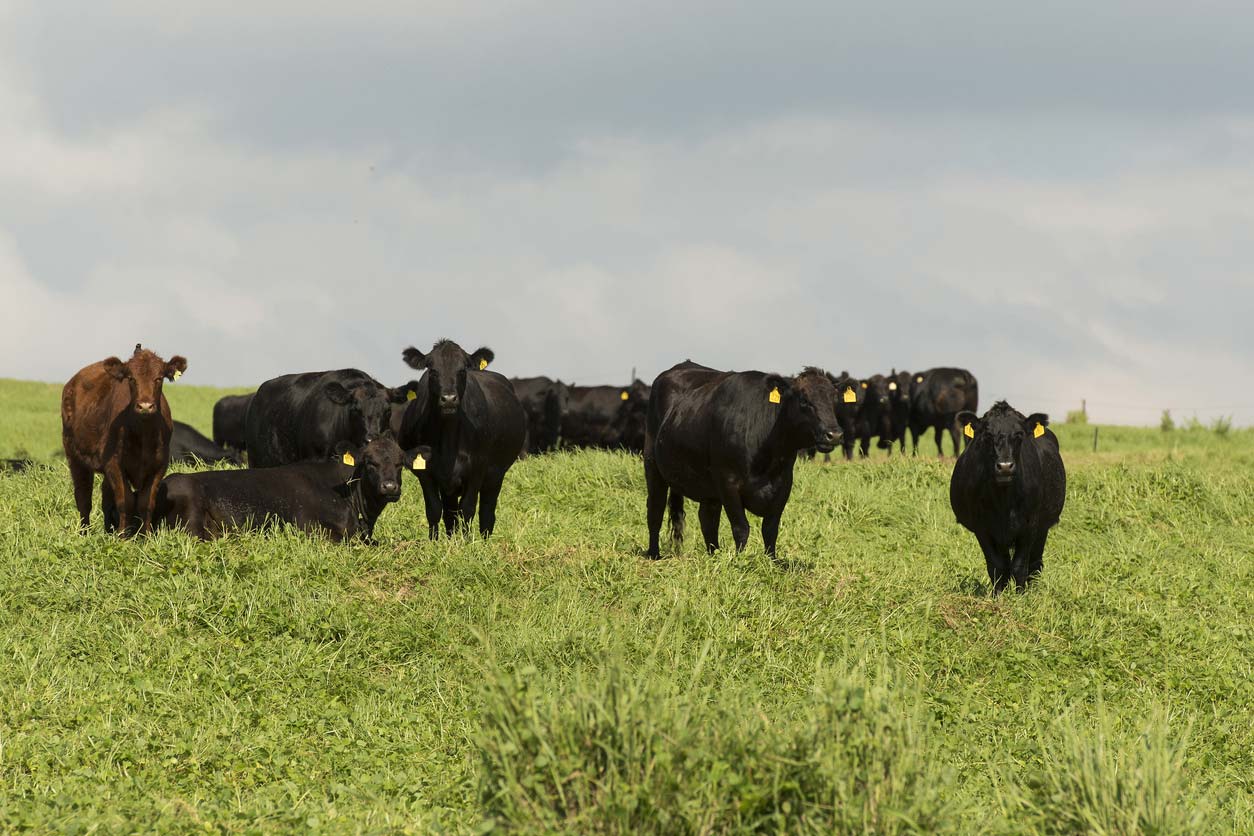
Grass-fed beef advocates claim that it's improve for the environment than traditional beef. Merely that, in and of itself, is not saying much. Afterward all, conventional beef production is nothing short of an environmental disaster.
Problems with the Cattle Manufacture
At least one-3rd of the world's arable land is used to raise livestock. And new areas are constantly being cleared through deforestation to make more than room — about alarmingly in the precious and irreplaceable Amazon rainforest. Beefiness cattle production contributes an enormous amount of greenhouse gas emissions, including methane, nitrous oxide, and carbon dioxide. In fact, according to a United nations Food and Agronomics Arrangement study, cattle affect our global climate more than than all of the earth's cars, planes, trucks, trains, and ships combined.
Cattle eat plants, which is where they receive the nutrients that they capture in their flesh. Simply they also turn those plants they eat into hoof, hide, basic, free energy, methane, and manure — lots and lots of manure. After cattle come up into a feedlot, they proceeds plenty weight to produce about (co-ordinate to my estimation) one new pound of beef for every 12 pounds of feed input. The other xi are substantially wasted.
A 2011 analysis by the Environmental Working Grouping looked at the carbon footprint of various foods over their unabridged life-bicycle, including the raw materials that go into them. In other words, in totality, how much do unlike foods contribute to climatic change?
They concluded that beefiness production emits about ten times more than greenhouse gases per pound of meat than chickens or pigs, which themselves emit about 10 times more than legumes. This ways that a pound of beef is responsible for 100 times more greenhouse gas emissions than a pound of beans.
And and then there'due south water. Some experts approximate that it takes more than i,800 gallons of water to produce a pound of conventionally raised beef. In total, the livestock sector uses at least 8% of the earth's clean, fresh water supply while polluting much of the residuum.
Is Grass-Fed Beef Whatever Unlike?
Proponents of grass-fed beef tell us that, unlike conventional beef, grass-fed beef tin can exist raised in a way that is actually expert for the planet. They argue that it improves soil with organic matter and benefits carbon sequestration and that information technology restores natural ecosystems and wildlife habitat, increases biodiversity, reduces our reliance on petrochemicals, improves water quality, and reduces greenhouse gas emissions like carbon dioxide. That all sounds expert, merely is it really true?
Carbon Sequestration
The globe has lost enormous reserves of soil carbon over the years, equally humans have converted forests and grasslands into state for crops and grazing cattle. The idea of soil carbon sequestration is that the carbon previously lost from soil could be returned to information technology via practices that restore degraded soils and conserve existing soil in a soil carbon pool. There are several possible ways to practise this, one of which is called carbon farming. In this process, farmers use plants to trap carbon dioxide, and so employ strategic practices to trap carbon in the footing — like planting long-rooted crops, incorporating organic materials in the soil, and tilling the land less frequently.
Another approach is rotational grazing. According to Successful Farming: "Rotational grazing involves controlling livestock's admission to pastures, allowing animals to graze in designated paddocks for limited periods of fourth dimension. The livestock are rotated to fresh pasture before they graze the grass down to the ground. This provides the grazed pastures with ample time to residue and then that the leaf matter can regrow. The more leaf affair a plant has, the more sunlight it can procedure through photosynthesis and the longer its roots will be. These root systems are key to maintaining salubrious soils."
Attaining Carbon Neutrality
A 2018 study published in Agronomical Systems, which was conducted past Michigan State University researchers and the Union of Concerned Scientists, suggested that the finishing phase of grass-fed cattle could exist managed in a way that makes them strongly carbon-negative in the outset few years. Over time, however, the buildup of carbon in the soil decreases, and the net bear on of fifty-fifty well managed grass-fed herds becomes merely carbon neutral. In conclusion, the researchers stated, "… the path to a climate-friendly, science-based, ethically consistent, and practically achievable conclusion on beef product and consumption remains about as articulate as the mud in a herd-trampled pasture."
Considering the devastating environmental consequences that accompany conventional modern beef production, it's heartening to hear that it might be possible, with well managed grass-fed herds, to attain carbon neutrality in the long run.
But although that could be an of import footstep in the right management, is it really a reason to chow downward on beef? About 60% of the world'south agricultural land is used for beefiness production. And all that country yields less than 2% of humanity's calories. What else could be washed with that land that might more finer regenerate soil and sequester carbon? What if nosotros used it to grow cover crops? Or used it to grow copse? It turns out, there are many ways we can use state to capture carbon far more than finer than rotational grazing. If you lot want some serious carbon-sequestration promise, check out the eight solutions in this article. (Spoiler alert: the word "beef" does non appear.)
The Remainder of The Ecology Pic
In some ways, grass-fed beef might actually be worse for the planet than feedlot beef. The biggest reason for this is that grass-fed cattle take longer to fatten upwards, so they live an average of 18-24 months, whereas feedlot cattle are typically killed at around 15 months. This actress longevity necessitates more cattle roaming around — and more land on which to abound their (grass) nutrient. If we moved all cattle out of feedlots, and we didn't reduce our beef consumption dramatically, we'd observe ourselves with a severe shortage of grazing state. According to a 2012 report published in the periodical Animals, if all the The states beef produced in 2010 were grass-fed, the manufacture would take required an additional 200,000 foursquare miles — an area larger than all the state in the states of New York, Pennsylvania, Florida, and Ohio combined. Of form, nosotros'd free upward some of the state currently growing corn, soy, and other feedstuffs for cattle feed. But not nigh enough to provide for all those cows roaming around for all those boosted months.
Amazonian Deforestation
For a look at the worst possible environmental touch on of large-calibration, grass-fed beefiness production, we need look no farther than Brazil, where an environmental nightmare of epic proportions is unfolding. In 2009, Greenpeace released a report titled "Slaughtering the Amazon," which presented detailed satellite photos showing that Amazon cattle were the biggest single cause of global deforestation. And in plow, are responsible for 20% of the earth'southward greenhouse gases.
Since then, the state of affairs in Brazil has simply gotten worse. Even Brazil's authorities, whose policies have fabricated the nation the world's largest beef exporter, and dwelling to the planet's largest commercial cattle herd, acknowledges that cattle ranching is responsible for 80% of Amazonian deforestation. Much of the remaining 20% is for land to abound soy, which is not used to make tofu. Most is sold to China to feed livestock.
Amazonian cattle are free-range, grass-fed, and possibly organic, simply they are still a plague on the planet and a driving force behind global warming.
Although well-managed grass-fed cattle might be able to sequester carbon in the soil, and they can be raised on natural grassland instead of freshly destroyed rainforest, they still contribute to climate change in other ways. The greenhouse gas methane, which cattle produce in staggering amounts, is 28 times more than potent than carbon dioxide over a hundred-year time frame. With the higher fiber content in grasses than grains, cattle may produce even more methane than grain-fed ones. And with grass-fed cattle living upward to twice as long as feedlot cattle, they produce methyl hydride for longer, likewise.
Is Grass-Fed Beefiness Better for Cows?
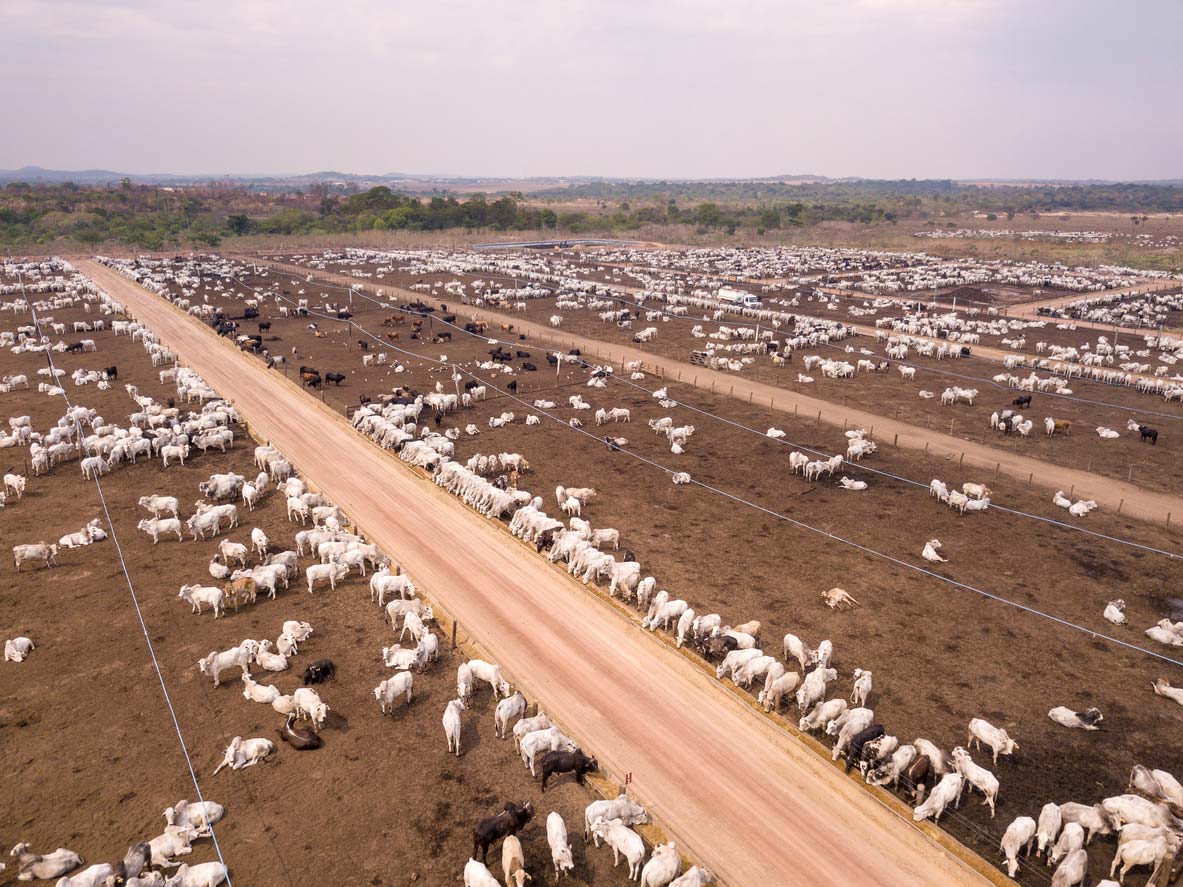
Grass-fed beef appeals to consumers who are told that it's meliorate for the animals. Only is this accurate?
In some big ways, yeah. They're healthier, and almost certainly happier, than conventional cattle. Again though, that'southward a low bar.
Feedlots such every bit California's Harris Ranch routinely cram up to 100,000 cattle into one square mile. But the cows aren't potty trained, and they don't pay for sewer hookups, either. So they alive their entire lives in a mess of their ain excrement.
Feeding cattle grain in feedlots can cause health issues, also, including liver abscesses, which is i of the reasons that grain-fed cattle are typically given antibiotics right in their feed.
Author Michael Pollan describes what happens to cattle when they are taken off of pastures and put into feedlots and fed corn:
"Perhaps the about serious matter that can go wrong with a ruminant on corn is feedlot bloat. The rumen is always producing copious amounts of gas, which is commonly expelled by belching during rumination. But when the diet contains too much starch and too little roughage, rumination all just stops, and a layer of foamy slime that tin can trap gas forms in the rumen. The rumen inflates like a balloon, pressing against the animal's lungs. Unless action is promptly taken to relieve the pressure (usually by forcing a hose downwardly the animal'southward esophagus), the cow suffocates."
Feedlot beef as we know it today would be impossible if information technology weren't for the routine and continual feeding of antibiotics to these animals. This leads direct and inexorably to the development of antibiotic-resistant bacteria. These new "superbugs" are increasingly rendering our antibiotics ineffective for treating illness in humans.
In comparison, cattle feel greater well-being and amend health when they're able to eat the diet for which their digestive systems were designed, and when they have access to more outdoor space.
While it's certainly true that grass-fed cattle live significantly better lives than their feedlot counterparts, there's still naught cheery about their deaths. Co-ordinate to People for the Ethical Treatment of Animals, many cows are live and witting for as long as seven minutes after their throats are cut. And some have their legs cut off while still breathing.
What Grass-Fed and Organic Beef Labels Really Mean
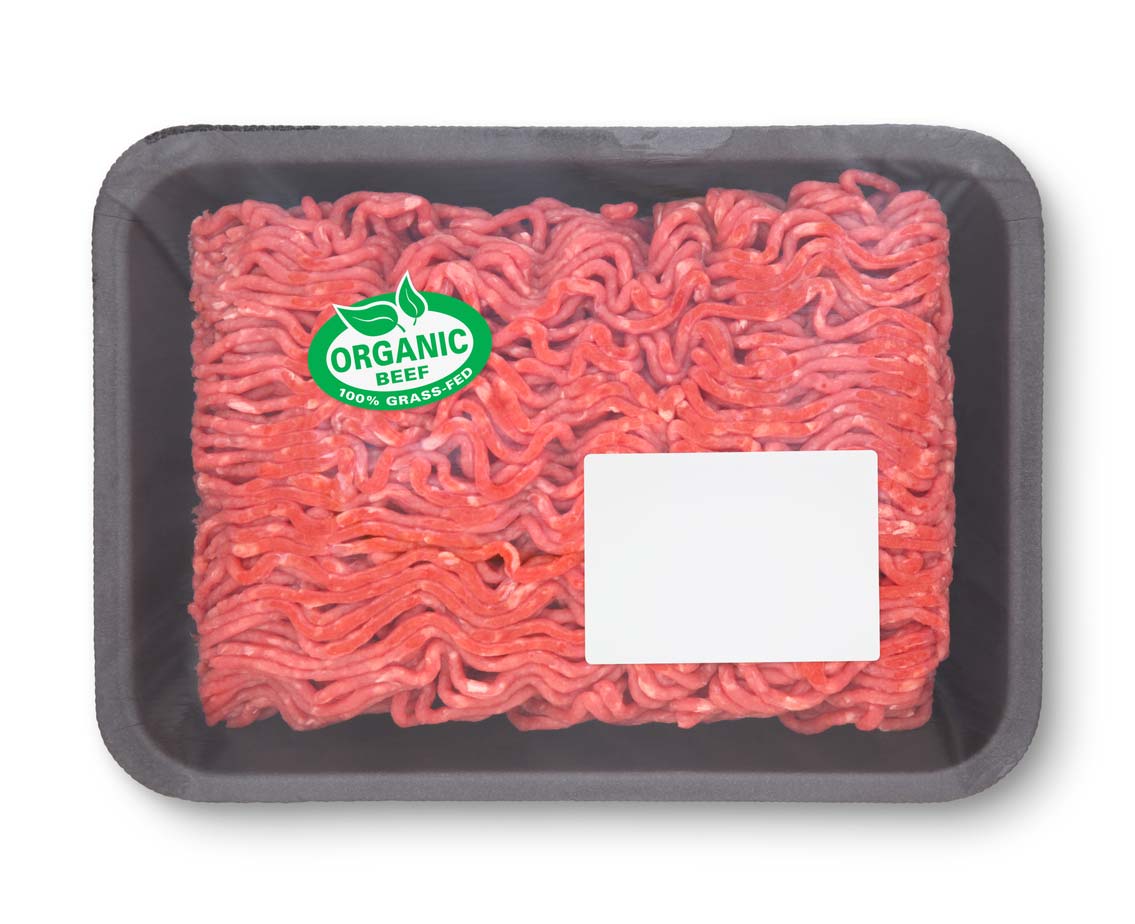
Grass-fed and organic beefiness attract premium prices. (In more layman'due south terms: They're expensive.) Merely the significant of the terms is poorly regulated and often misunderstood. Technically grass-fed should mean that the cattle lived its entire life on pasture, without confinement, eating grass. But proceed in mind that most cattle are grass-fed for at least part of their lives until they weigh 600 to 800 pounds, at which betoken they are shipped off to a feedlot for fattening.
And the US government isn't of much aid hither, either. Starting in 2016, the USDA dropped regulatory command of the term altogether. So some products might be deceptively (yet legally) sold every bit "grass-fed" beef, even if cattle lived a portion of their lives cooped up in feedlots, eating grain and soybeans.
Consumers who care virtually this critical distinction demand to brand sure they're getting 100% grass-fed beefiness, which is sometimes called "grass-finished beef."
The USDA organic certification guarantees that the animals were raised on pesticide-costless food, and were never given hormones or antibiotics. But beef labeled "organic" can still come from animals that were cooped upward in feedlots and fed grain and soy for the latter office of their lives.
Anyone looking for truly organic, 100% grass-fed meat needs to look advisedly at what they're actually getting.
The American Grassfed Association (AGA), which advocates for grass-fed producers and offers a certification program for cattle farmers, assures that beef bearing its seal comes from cattle raised on a 100% grass-fed nutrition. And they add further specifications, too, including that the cattle are raised by family farmers, on pastures without confinement, and are never fed antibiotics or hormones. In that location appears to exist a few hundred member farms beyond the US that currently bear the AGA certification.
There are other certifying bodies, as well, including the Nutrient Alliance Grass-Fed Certification, and the USDA's Small & Very Modest Producer Program.
Grass-Fed Beef: Amend, Just Not All-time
Conventional feedlot-finished beef is aught brusque of a health, ecology, and ethical disaster. And grass-fed beefiness is arguably better on all iii fronts. So if you're going to eat beef, then at that place are practiced reasons to cull grass-fed and organic beefiness over the products of feedlots.
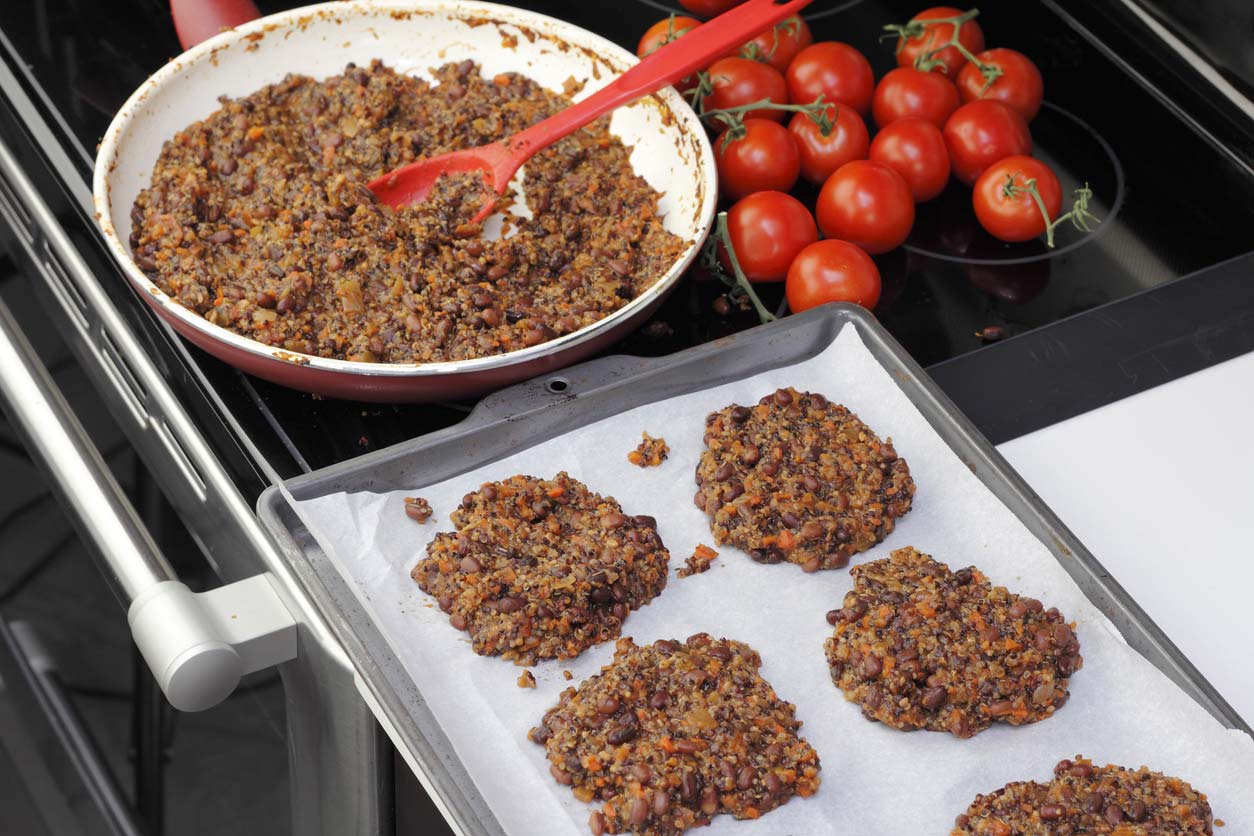
But if you desire to salvage money, and do a good plough for your wellness, the planet, and the animals, at that place are plenty of found-based options to cull from. (For our commodity on how to go rolling on a whole-foods, constitute-powered diet, click here.)
In that location are too plant-based meats, of grade. Simply don't forget about beans. If the whole world started swapping beans for beefiness, we could accept a huge seize with teeth out of climate change. We could save what'southward left of the Amazon rainforest. We could spare the lives of tens of millions of cattle. We could restore the fertility of our soils. And we could preclude countless heart attacks, too.
Tell us in the comments:
- Do you lot swallow grass-fed beef? Why or why not?
- Exercise you think that grass-fed beef can exist part of the climate change solution?
- What are some of your favorite beefiness-free nutrient alternatives?
Characteristic image: iStock.com/adamkaz
Read Side by side:
- Veggie Burgers and Found-Based Meat: Pros and Cons
- What's All Wrong About Annals Of Internal Medicine'southward Cherry and Processed Meat Advice
hennesseythenined62.blogspot.com
Source: https://foodrevolution.org/blog/grass-fed-beef-2021-update/

Post a Comment for "World Health Organization Grass Fed Beef"